AI Agents for Office Work: Scope Your First Project
Plan an office AI project with clear workflows, permissions, integrations and pilot criteria. A practical guide for teams comparing development proposals.

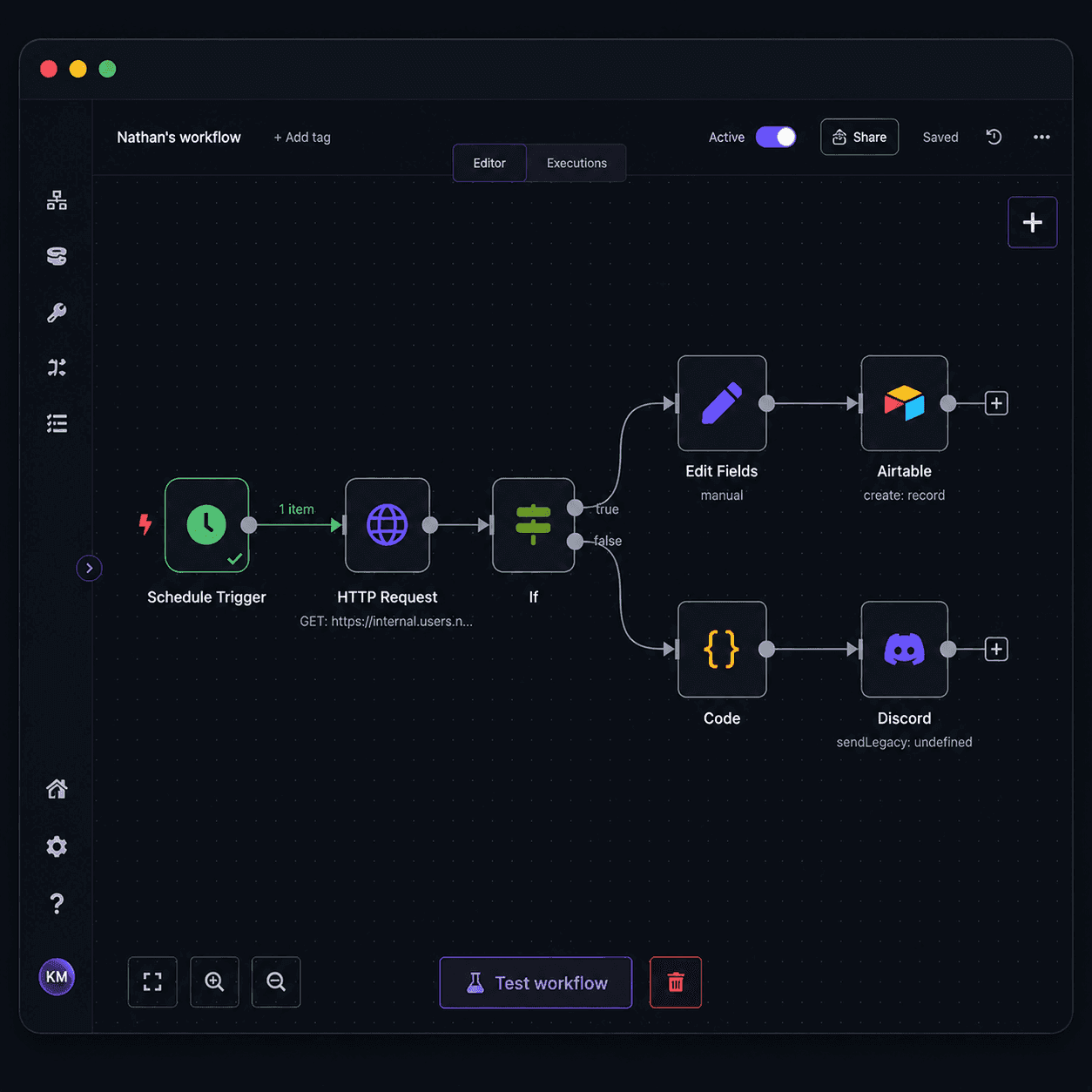
An office AI project starts with a recurring job: find the right policy, turn an incoming request into a structured record, or prepare information for an approval. Before choosing a model or an agent framework, write down who needs the result, where the source information lives and what happens when the system is uncertain.
At Atyuttama, we design and build SaaS products, custom applications and AI workflows. A useful project conversation starts with the workflow you need to improve and the evidence that would make a first release worth keeping.
Choose one workflow that is easy to inspect
Start with a job you can explain through a real example. “Help the office with everything” leaves too much undefined. “Prepare a draft response to a policy question using documents the employee is permitted to read” gives the project a clearer boundary.
Three possible starting points follow. These are illustrative scopes, not client results or promises of savings.
Internal knowledge assistant. An employee asks a question, the system retrieves information from approved documents, and the answer points to the sources. The first release should define which documents are current, who can read them and what the assistant says when the source material does not answer the question. Questions involving confidential records need an explicit access design.
Incoming-request triage. A shared inbox or form receives a request. The system proposes a category, extracts the fields needed for a work item and drafts a routing suggestion. A person reviews the result before an external reply or an important change. The pilot can measure correct categories, missing information and the effort required to correct a draft.
Document-to-record preparation. A team receives a document and manually transfers selected fields into a system. The first release can prepare a proposed record and flag missing or conflicting fields. Define how the original document stays traceable and who approves a write. Financial approvals and employment decisions need their own review process; they should not quietly become autonomous because the input is a document.
Decide whether AI is needed
List the steps in the current process. Some may be better handled by a straightforward form, validation rule or integration. Consider AI where the input is variable language or where a person needs help understanding source material. A build may combine both. Ask the delivery team to explain why each step needs the approach they propose.
This helps you compare proposals. “We will add an AI agent” says little about what you will receive. A useful proposal explains inputs, outputs, source systems, permissions, review points and failure handling.
Write the first-release boundary
Use this brief before asking for an estimate:
- User: Who will use the system, and who owns the workflow?
- Trigger: What starts the work: a question, email, uploaded document or scheduled task?
- Sources: Which documents and business systems may it read?
- Output: Does it answer, draft, classify, recommend or change a record?
- Approval: Which actions require a person to review the exact proposed change?
- Exceptions: What happens when data is missing, sources disagree or an integration fails?
- Acceptance: Which real examples must the first release handle correctly?
- Operations: Who will maintain documents, review failures and decide when to change the system?
Keep credentials and sensitive records out of an initial public enquiry. A description of the workflow and redacted examples are enough to begin discussing scope.
Agree how to evaluate the pilot
Choose examples before reviewing the demonstration. Include ordinary requests, ambiguous requests, incomplete information and questions the assistant should decline or hand over. Have the workflow owner label what a useful answer or action would look like.
Track the denominator as well as the successes. For example, “24 of 30 review examples were accepted without correction” is more informative than a highlight reel. This is an example of a reporting format, not an Atyuttama result. For a real pilot, record the review criteria, test population and unresolved failures.
Measure end-to-end work. If preparing a draft is faster but correcting it takes longer, the team has not established a saving. Compare similar tasks, include review effort and keep quality failures visible. Agree a threshold with the workflow owner rather than copy a number from another company's case study.
Compare build proposals on the same basis
Ask each team to separate the initial implementation, hosting and model usage, integration maintenance, document updates and ongoing evaluation. Ask what you own, what depends on a provider account and how a person can investigate a failed run. Request a demonstration of a failure case as well as a successful example.
A responsible estimate follows the workflow, data and integration requirements. A generic delivery date or fixed saving before that discovery is weak evidence. The useful outcome of the first conversation is a clearer scope and a way to test it.
Discuss your workflow with Atyuttama
Tell us which office task repeats, who performs it, which systems it touches and where the work gets stuck. We can discuss whether it calls for a custom application, an integration, an AI assistant or a combination.